
Ready To Give Your Legs The Support They Need?
Recieve a treatment plan or compression fitting tailored to your circulation and lifestyle.

Styles and Construction
Compression socks and stockings (GCS) come in various styles, lengths, constructions, designs, and fabrics. We aim to match you with the most effective compression for your concerns, while maximizing comfort and ease of use.
Styles range from below-knee, thigh-high, to tights and pantyhose (available in open or closed-toe). There are also compression shorts for pelvic conditions. Most GCS are available off-the-shelf, but some are custom-made depending on leg shape and size.
Construction Variations:- Circular-knit: Thinner, smoother, and easier to put on. Generally used for mild to moderate compression.
- Flat-knit: Thicker and firmer, less likely to dig in or roll. Used for firm compression (lymphoedema, lipoedema, severe oedema).
- Maternity: Expandable abdominal panel
- Pelvic and Vulval: No abdominal pressure, with a groin support panel
- Sports: Calf support, lightweight, breathable materials
- Postoperative: Mild to moderate compression
- Appearance: Various colours, patterns, sheer, and opaque options

Compression Materials
Graduated Compression Stockings (GCS) are manufactured from high-quality materials, each bringing specific characteristics and benefits to your treatment plan.
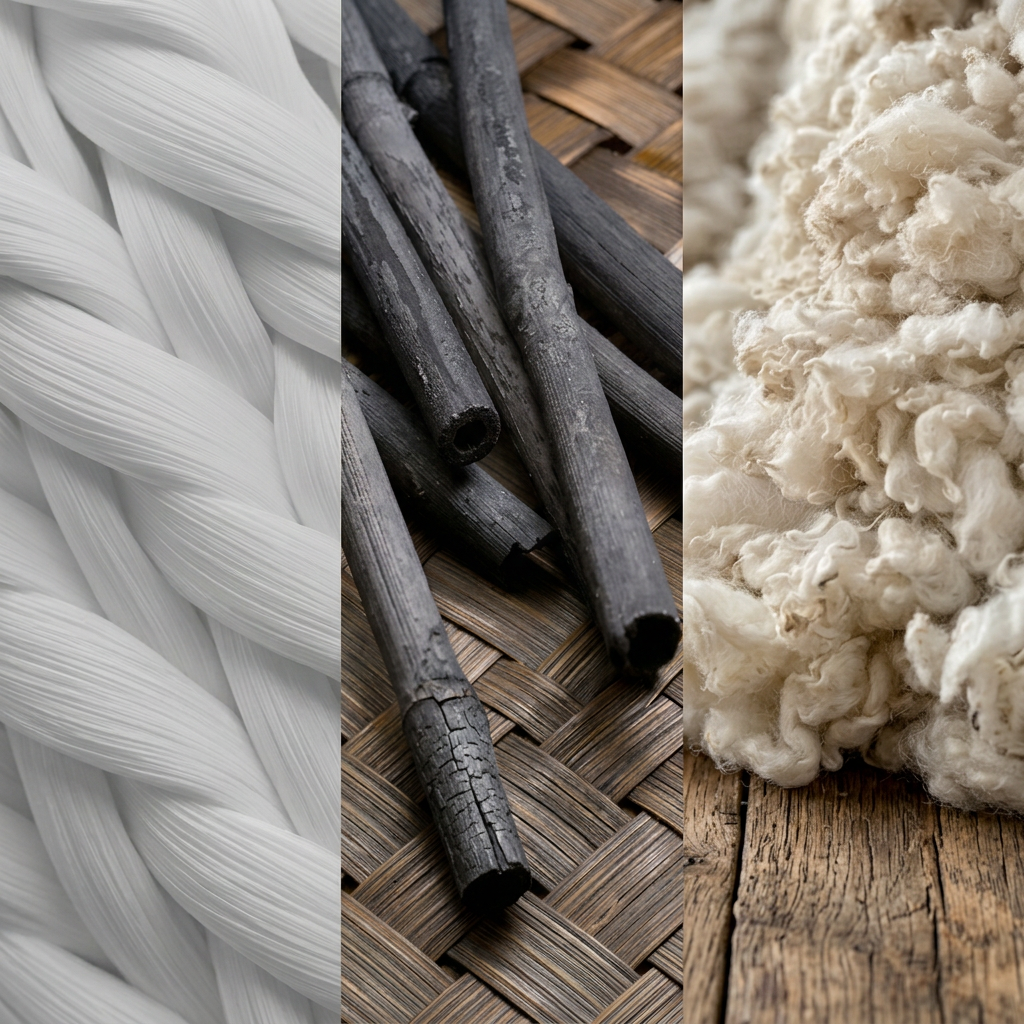
- Nylon (polyamide): Provides strength, durability, and shape retention ensuring consistent, long-lasting compression.
- Elastane (spandex / Lycra®): Provides elasticity and stretch recovery. This allows graduated compression to be maintained while enabling ease of movement.
- Cotton Blends: Added for softness and skin comfort. Improves breathability and is ideal for sensitive or eczema-prone skin.
- Microfibre: Fine synthetic fibres for a smooth, cosmetic finish. Lightweight and soft against the skin, often preferred for daily wear and office use.
Special Material Features:
The majority of GCS are Latex-free (please tell one of our nurses if you have a Latex allergy). Some stockings are impregnated with silver or copper for antimicrobial properties, while others utilize Merino wool for its natural anti-odour benefits.
Stocking Size and Measure Guide
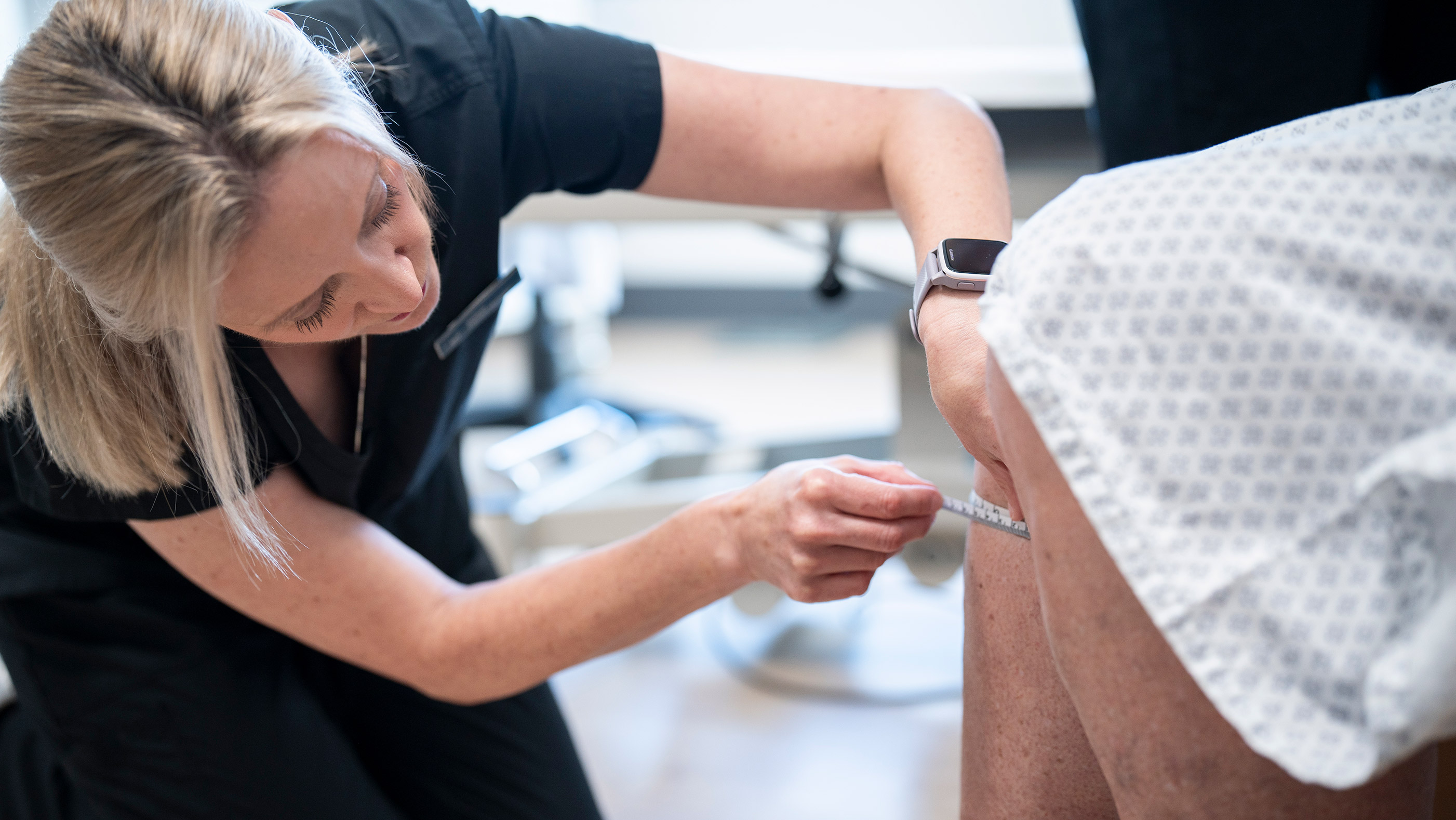
The correct fit, and strength of compression socks and stockings is essential for them to be effective, comfortable, and safe. At Pulse Compression, we provide a specialist nurse assessment and fitting service to ensure perfect results.
How to Measure
- When to measure: First thing in the morning when leg swelling is minimal. (If measuring later in the day, elevate legs for 10–15 minutes beforehand). Measure bare skin, not over clothing.
- What you need: A standard tape measure (cm).
- Ankle circumference: Measure at the narrowest point above the ankle bone. Do not pull the tape tight—snug but not constricting.
- Calf circumference: Measure at the widest part of the calf, keep the tape level and relaxed.
- Knee-high length: Measure from the floor to 2–3 cm below the knee crease.
- Thigh-high length: Measure from the floor to the upper thigh/buttock crease.
- Tights / pantyhose: Measure floor to waist, and measure hip circumference.
Fit, Wear, and Care
The Correct Fit: Should feel firm but comfortable, and not cause pain, numbness, or tingling. They should sit smoothly with no wrinkles, stay up without rolling or digging in, and improve comfort within 30–60 minutes of wear.
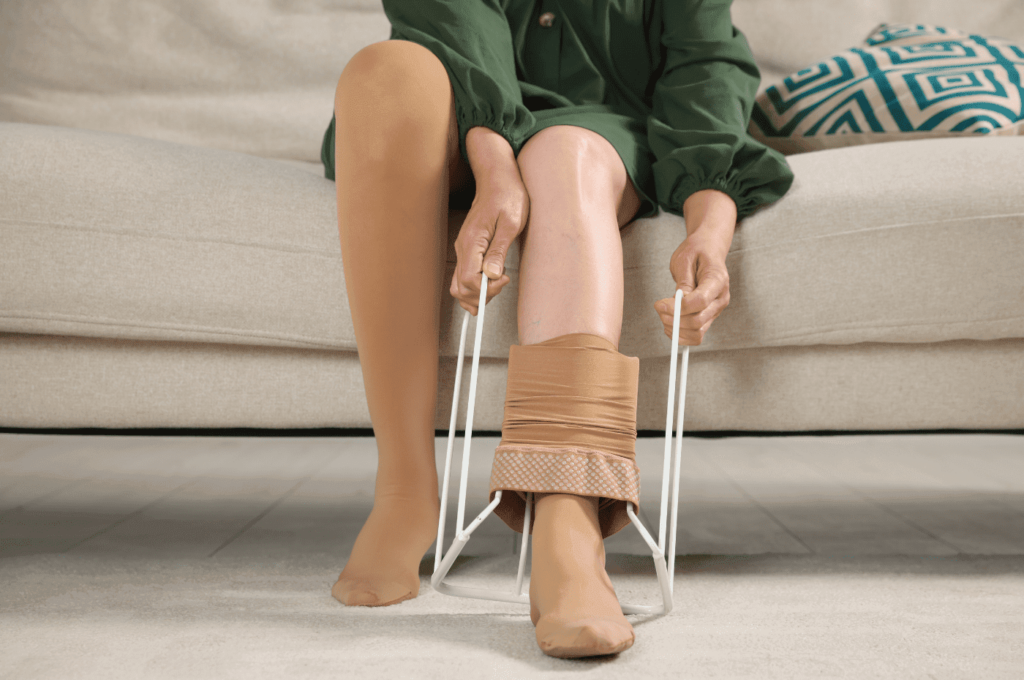
Putting Them On: Turn the stocking inside out to the heel. Place foot in first, positioning the heel correctly. Gradually roll up the leg—do not pull. Use rubber gloves or a stocking aid if needed, and smooth out any wrinkles.
Wear Schedule: Wear during the day and remove at night (unless instructed otherwise). Put on again in the morning.
Warning Signs of Poor Fit: Toe discoloration or coldness, deep marks, pinching, rolling, increasing pain or swelling, or stockings sliding down.
Special Conditions
Pregnancy: Re-measure as legs change, use maternity-specific pantyhose.
Lymphoedema / lipoedema: Often need flat-knit or custom-fitted stockings.
Accessories and Extras
Compression socks and stockings (GCS) can be difficult to put on and take off, particularly for the elderly, people who are not very flexible, during pregnancy, after operations, or if you have lost dexterity or power in your hands. Various stocking aids are available to help.
- Stocking Frames: Metal or plastic frames that hold the stocking open, allowing you to easily step into the GCS.
- Slip Socks: Smooth, low-friction fabric sleeves worn over the foot. They are used with open-toe GCS and are removed through the open toes once the stocking is on.
- Foot Slips: Similar to slip socks, but specifically designed for use with closed-toe GCS.
- Rubber Gloves: Any type of rubber glove will do. They dramatically improve grip and reduce the risk of laddering or tearing the fabric.
- Skin Glues: Help keep GCS up throughout the day. Particularly useful for thigh-length styles.
Ready to restore your vascular health?
Share your goals with the Pulse Health team and receive a treatment plan or compression fitting tailored to your circulation and lifestyle.
Phone: 0800 45 45 99
Email: info@pulsehealth.nz
Office Address: 1/39 Ghuznee Street, Te Aro 6011, Wellington